30 October 2009

Pantomime Individualism


Canary Wharf Seasonal Reassurance Patrols

As a regular seasonal response, the Metropolitan Police Service is increasing the number of high visibility reassurance patrols around the Canary Wharf estate, including armed police officers, mounted police and specialist dog units. The increase in patrols is not in relation to any specific information or incident and colleagues are advised that there will be random checks of pedestrians and vehicles. If you are stopped by a patrolling officer, please be patient and cooperative.

20 October 2009

"Youth gets power because it doesn't know what to do with it."


"However as Beckwith and McDonald remember, by then it had become more difficult to sustain a collaborative approach, and as time went on there were fewer meetings with fewer attendees. The group's research and production methods began to resemble those of the exquisite corpse, with images assembled bit by bit, each collaborator adding to the composition in sequence. This tendency ran contrary to the privileging of process and collaboration that [Colin] de Land had insisted on, and threatened to move them towards the mire of the blinkered, career-obsessed art world."

– Jackie McCallister, A.C.2K, A.F.A., Co., C.d.L. Afterall 22.
[Note: article regarding the group Art Club 2000, which was active from 1992-1999.]

18 October 2009

This season, say it with neon

"What a day was this!... On that day, 30,000 of the finest animals in the world were concentrated within an area of four or five acres. They had been pouring in from ten o'clock on the Sunday evening, insomuch that by daylight on the Monday they presented one dense animated mass, an agitated sea of brute life. All around the market the animals encroached on space rightfully belonging to shop-keeping traffic... for the cauldron of steaming animalism overflowed from very fullness."

George Dodd, The Food of London quoted in Hungry City by Carolyn Steel

15 October 2009

The Magic of Woodworking

Seischis Nua

"In last year's issue of this annual paper, we ran with the headline - The End or a New Beginning? One year on, it's clearly a new beginning.
The art market ended its spring/summer season on a more optimistic note than many had predicted. Sales in Hong Kong, New York and London were clearly showing signs of a market levelling out. In June, London's contemporary evening sales raised £42.3 million against a low estimate of £42.6 million. although the total was 76% lower than June 2008, it was still an encouraging 63% higher than what was achieved in February 2009.
Global stockmarkets have experienced a rapid price appreciation since reaching a low in March this year. However, the market runs the risk of running out of steam as the recovery in the US seems to be dragging on longer than expected, increasing the danger of a double-dip recession – which could have consequences for the art market recovery process.
So where is the contemporary art market going from here? Sideways, is the most likely scenario. The results from the recent contemporary art auctions in New York were encouraging, and came in-line with the market expectations. Sotheby's sold 75.1% by lot and 85% by value, raising $5.5 million, which was roughly half the amount raised in September 2008 ($10.5 million). Christie's achieved a similar result, with 83% sold by lot and 88% sold by value. (...)
ArtTactic's most recent US and European Art Market Confidence survey in June 2009, also confirmed that confidence is coming back, after a 81% drop in December 2008. The survey indicated that the downturn in the contemporary art market could end sooner than initially anticipated, with 64% of the respondents believing the contemporary art market could rebound within the next 1-2 years."
ArtTactic; An Insider's View to the Art Market, Autumn 2009 (a free newspaper handed out on the streets in front of Regent's Park, London, site of Frieze Art Fair)

3 October 2009

"Familiar with contemporary literature, film, philosophy and science, the young artists are extremely articulate – many earn M.A.'s as a credential for teaching. And like many of their peers, they are also into marijuana and LSD. ... The life style and perceptual distortions of drugs are simply taken for granted the way abstract expressionists took drinking for granted."
–Howard Junker, Newseek, summer 1968

1 October 2009

stumbling over your own corpse


"Despite his admiration for Fried, Wall is generous when it comes to Minimalism [to the extent] that a work by Carl Andre [that] is similar in scale to Las Meniñas inspires him to a rather bizarre fantasy in which he is standing on an Andre while looking at Las Meniñas."
– Sven Lütticken, Secret Publicity

29 September 2009

A circle of saints

I FOLLOW NOONE I AM A LONE SOLDIER

PARTICIPATIONJUNKIE@

ORDERANDDISORDER@GMAIL.COM

ALLPOSSIBLEOUTCOMES

NEVERDISAPPOINTED

WHEREDIDYOUGETYOURCURLYHAIR@

ARBITRARY

ABSENT_FATHER@INTRUCTIONPIECE.CH

12 September 2009

From the Library of Adam Curtis

"thinks that it is crucial to work less, to insist on better payment (even if this means no payment at all), to stop producing oneself (as on Facebook), to try to establish solidarity with like minded people (not on the net) and this against the forced individualisation and isolation by capitalism, to think things through carefully before publishing them, instead of throwing all ones knowledge away for nothing etc etc"
– Isabelle Graw via Facebook

7 September 2009

"WHY do marketing psychologists call refrigerators 'frozen islands of security'?"


NASA researcher checking hydroponic onions with Bibb lettuce to his left and radishes to the right

"Reports of Gericke's work and his claims that hydroponics would revolutionize plant agriculture prompted a huge number of requests for further information. Gericke refused to reveal his secrets claiming he had done the work at home on his own time. This refusal eventually resulted in his leaving the University of California."


http://en.wikipedia.org/wiki/Hydroponics

5 September 2009


"From this encounter at the Café Select, the idea of an exhibition of do-it-yourself descriptions and procedural instructions took shape, an exhibition that would mix contributors from different generations, different cultural backgrounds, and different disciplines, and one whose parameters would leave all contributors perfectly equal in the use of instructions. On paper napkins, we started to write down names of artists who we thought would be likely to deliver some fascinating instructions, even though they really hadn't used this modus operandi before. The list appeared infinite, with the result that do it was en marche as an exhibition that would always exist as a score until a venue could be found in which it could be interpreted and performed anew each time."
– Hans Ulrich Obrist

2 September 2009

Refutation in action


Real estate agents working outside in a park to plot out maps of their properties.

"The less you eat, drink, buy books, go to the theatre, go dancing, go drinking, think, love, theorize, sing, paint, fence, etc., the more you save and the greater will become that treasure which neither moths nor maggots can consume – your capital. The less you are... the more you have."
– Karl Marx

27 August 2009

15 August 2009

Steve Carr, Cigarette Tree (from the series Smoke and Mirrors)2007.
35mm transferred to DVD, Duration 3 mins 51 secs

"Queer Contracts Made With Actors"

Lucy McKenzie No Smoking
  1. Any person employed in this company acting improperly, talking loudly, or using language calculated to produce a quarrel, shall forfeit $5 and be liable to discharge, at the option of the manager.
  2. After the proper notice on call boards, all rehearsals must be attended. For absence from each scene or piece of music, 50 cents forfeit; whole rehearsals, $5 forfeit.
  3. Any person appearing intoxicated on the street, in the hotels, barrooms, or on the stage at rehearsal or performance, or who may be unable to appear for the same reason, shall forfeit a week's salary and be liable to an immediate discharge, at the option of the manager.
  4. A person introducing profane language or improper jest, not in the author, shall forfeit $1. A person restoring what is cut out by the manager will forfeit $1.
  5. Any member absenting himself or herself from the theatre of an evening when concerned in the business of the theatre will forfeit a week's salary and be liable to discharge by the manager.
  6. Members prevented from attending to their duties by indisposition are requested to send notice to the manager a sufficient time before performance to make the necessary arrangements. Pleas of indisposition must in all cases be accompanied by a certificate of a respectable physician. In case of illness the manager reserves the right to withhold or pay salaries.
  7. For making the stage wait, or talking behind the scenes or in the entrances, $2 forfeit.
  8. No person permitted, on any account, to address the audience without the consent of the manager. Any one violating this rule will forfeit a week's salary, and be liable to discharge, at the option of the manager.
  9. No one in any capacity allowed to introduce or have friends, relatives, or strangers behind the scenes, or in any of the dressing rooms, either before, during or after a performance or rehearsal, without the consent of the manager, in writing.
  10. Any person engaged in this company who shall render services in any other theatre, or any concert or public exhibition, without the consent of the management, will forfeit a week's salary and be liable to immediate discharge, at the option of the manager.
  11. Artists will not be allowed to go into the audience part of the theatre on the same evening on which they are to appear or have appeared on the stage, without the consent of the manager. for a violation of this rule they shall forfeit $5.
  12. Any person who shall be guilty of conduct unbecoming ladies and gentlemen, and calculated to bring disrepute upon this organization–either in or out of the theatre, at the hotels, or upon the railway trains; or who shall conspire against the interest of the manager, defame any member of the company, make public the private affairs of the concern, or by other conduct manifest a disposition to throw obstacles in the way of the management, will forfeit his engagement immediately.
  13. No intoxication beverages allowed in the dressing rooms, the stage doorkeeper having strct and imperative orders regarding this rule. Any one breaking this rule will forfeit five dollars.
  14. Loud talking or boisterous laughter in the dressing rooms can be distinctly heard in the auditorium and is therefore forbidden. Any one violating this rule will forfeit two dollars.
  15. Employees must be on trains stated on callboard notice. Any one failing to do so will forfeit five dollars and also pay his own railroad fare.
  16. Any one disobeying the stage manage, or showing any disrespect toward him, will forfeit five dollars and be liable to discharge, at the option of the manager.
  17. All sums forfeited as herein stated shall be deducted from the salary of the week during which the forfeiture occurred.
  18. Employees must not leave the theatre without permission; they must remember that their services belong to their manager from the rise to the fall of the curtain.
  19. Employees will not be allowed to carry more baggage or articles of wardrobe than is positively necessary for their business, neither shall they increase the quantity during the tour, unless for use upon the stage. Employees who shall be found to carry any superfluous articles of wardrobe or properties, &c, will be charged extra.
  20. Artists shall be ready to appear fully one act before their own, and must immediately respond to encores at the stage manager's request or signal.
  21. No artist will be allowed to dictate to the manager what his or her place on the programme or house bill shall be; the manager may alter the same at his discretion, and any artist creating unpleasantness by expressing dissatisfaction respecting the same, either to the manager or his representative, or to the other members of the company, will forfeit five dollars.
  22. Employees are expected to take tickets at theatre if required by management.
  23. Salary day will be every Wednesday evening after the performance. Positively no money advanced, as it puts the management to considerable trouble keeping books, and creates arguments on salary day.
  24. Any new rule which may be found necessary shall be considered as part of these Rules and Regulations.
– From The New York Times; published February 22, 1903.

12 August 2009

Dutch Courage


Sergeant Alan Clayton said: “This simple piece of equipment will have a big impact on drug use in pubs and clubs.

"It looks like a normal LED torch but if it is pointed at the person’s nose and mouth area it shows up bright green if they have been taking the drug.

“It is even easy to see the minute cocaine crystals secreted within the nasal hair.”

“Small traces of cocaine are also left on the cheeks and chin that are not visible to the naked eye and these show up bright green too. It really is amazing.”

He added: “When people have been drinking it gives them dutch courage.

“When they have taken cocaine it can give them an almost super strength and the two in combination can lead to violent outbursts.

“This torch could reduce trouble in future and it could also cut down on people going into venues and selling drugs.”

– Lancashire Telegraph, March 31st, 2009.

4 August 2009

Success Boulevard

Photo - Max Bacharach


At a Christmas party at a rich painter's studio I had a disagreement with a gallerist about what artists are looking for. Our claims both perfect clichés: I bellowed "freedom" and he growled "eternity".

There was nothing at stake, though.
That's why he claimed this city is the new Berlin, the Berlin of 15 years ago; all these divided factions can still come to a Christmas party and there are no fights.

This is now impossible in Berlin.

3 August 2009

Helmets


Here's to US!!!!

No matter what our kids and the new generation think about us,

WE ARE AWESOME !!!!

OUR LIFE IS LIVING PROOF !!!!

To Those of Us Born

1930 - 1979

TO ALL THE KIDS WHO SURVIVED THE

1930's, 40's, 50's,

60's and 70's!!

First, we survived being born to mothers who smoked and/or drank while they were pregnant.

They took aspirin, ate blue cheese dressing, tuna from a can and didn't get tested for diabetes.

Then after that trauma, we were put to sleep on our tummies in baby cribs covered

with bright colored lead-base paints.

We had no childproof lids on medicine bottles, locks on doors or cabinets and when we rode our bikes,

we had baseball caps

not helmets on our heads.

As infants & children, we would ride in cars with no car seats, no booster seats, no seat belts, no air bags, bald tires and sometimes no brakes.

Riding in the back of a pick- up truck on a warm day was always a special treat.

We drank water from the garden hose and not from a bottle.

We shared one soft drink with four friends, from one bottle and no one actually died from this.

We ate cupcakes, white bread, real butter and bacon. We drank Kool-Aid made with real white sugar. And, we weren't overweight.. WHY?

Because we were always outside playing....that's why!

We would leave home in the morning and play all day, as long as we were back when the streetlights came on..

No one was able to reach us all day. And, we were OKAY.

We would spend hours building our go-carts out of scraps

and then ride them down the hill,

only to find out we forgot the brakes. After running into the bushes a few times, we learned to solve the problem

We did not have Play stations, Nintendo's and X-boxes. There were no video games, no 150 channels on cable, no video movies or DVD's,

no surround-sound or CD's,

no cell phones,

no personal computers,

no Internet and no chat rooms.

WE HAD FRIENDS and we went outside and found them!

We fell out of trees, got cut, broke bones and teeth and there were no lawsuits from these accidents.

We would get spankings with wooden spoons, switches, ping pong paddles, or just a bare hand and no one would call child services to report abuse.

We ate worms and mud pies

made from dirt, and

the worms did not live in us forever.

We were given BB guns for our 10th birthdays, made up games with sticks and tennis balls and, although we were told it would happen, we did not poke out very many eyes.

We rode bikes or walked to a friend's house and knocked on the door or rang the bell, or just walked in and talked to them.

Little League had tryouts and not everyone made the team.

Those who didn't had to learn

to deal with disappointment.

Imagine that!!

The idea of a parent bailing us out if we broke the law was unheard of. They actually sided with the law!

These generations have produced some of the best

risk-takers, problem solvers and inventors ever.

The past 50 years have been an explosion of innovation and new ideas.

We had freedom, failure, success and responsibility, and we learned how to deal with it all.

If YOU are one of them, CONGRATULATIONS!

You might want to share this with others who have had the luck to grow up as kids, before the lawyers and the government regulated so much of our lives for our own good.

While you are at it, forward it to your kids so they will know how brave and lucky their parents were.

Kind of makes you want to run through the house with scissors, doesn't it ?

~

love you guys!

wendy

30 July 2009

Not Yet the State's Bitch

During my afternoon break, my not unsensible 'boss' lamented with me over the fact that I was not a recipient of a national artist grant. His suggestion: "Why not make art to live in - you know -like architecture, or even an interesting bathroom?...art is for everyone afterall, and it should be pleasing ... Stephen Harper is really a scary scary man"

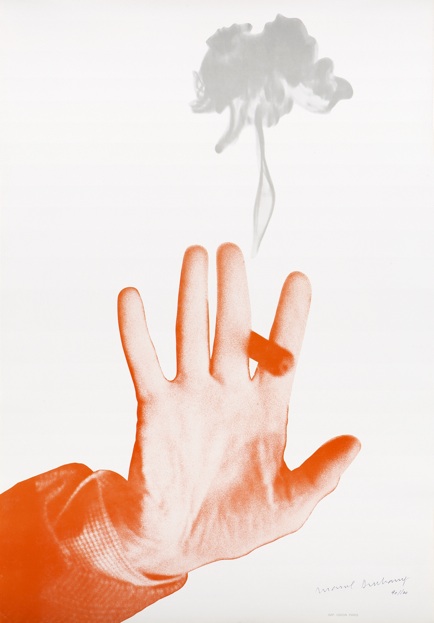
Marcel Duchamp, “Untitled (Hand and Cigar),” 1967. Lithograph. Edition of 100. Norton Simon Museum, Gift of Mr. John Coplans in homage to Mr. Walter Hopps. © 2008 Artists Rights Society (ARS), New York / ADAGP, Paris / Succession Marcel Duchamp]

28 July 2009

Posture and gas


"You walk through the uninviting entrance into a completely dark foyer where you can vaguely perceive that there are a few people shuffling around. Then a flashlight lights up and you put your membership card in its beam. You’ve passed the first test. You go through the doors at the back of the lobby to the stairway. There are two official-looking if a bit stoned attendants there to check your membership number off in a ledger, write down the number of guests with you (you’re allowed two), and write out a bill—$19.00 for three. You then wait in line to go upstairs. This is the tensest part of the evening because you can hear the music from upstairs, and they’re usually playing one of your favorite songs, so you know you’ll miss dancing to it. At the top of the stairs, which are usually crowded with anxious, whispery guys, you pay your money and get your hand stamped with ink that glows under black light. Finally, you’re in, but still not ready for the dance floor. There’s another line at the coat check, which takes forever, because you have to decide there and then how much to take off, and there’s a feverish shuffling of necessities from the pockets of shed clothing to pockets in what you’re still wearing: joints of dust, poppers, inhaler, downs, cigarettes, matches, coke, coke spoon, ethyl chloride (if you’re a rag queen). If you’re smart, you do all of this at home, but that means making the difficult decisions before you’ve got the feel of the place.

"Place: Synthetic materials, industrial gloss, futuristic, spacey,
technologized surfaces and lighting. Enormous plants and
bowls of fruit appear as if technologically produced, having
no similarity to natural objects. Views through doorways to
the outside world are extremely disturbing. Views of reality
look unreal, nightmarish, tacky. Going outside is always a
shock, and it takes days to readjust to ugly reality.
People: Synthetically produced bodies using body-building
machines and protein supplements. Bodies moving en masse,
like cogs in a machine."

– Douglas Crimp

23 July 2009

Sex in the (frankfurt) kitchen


“Irresponsible, reckless, carefree, wild, rich — we were just kids doing drugs and being bad, out at bars every night,” Mr. McGinley wrote in an e-mail message circulated to friends after Mr. Snow’s overdose. “Sniffing coke off toilet seats. Doing bumps off each others’ fists. Driving down one-way streets in Milan at 100 miles an hour blasting ‘I Did It My Way’ in a white van.”

TOM BURR


"a long perfect ash formed on the end of the cigar, the white ghost of the leaf with all its veins and its fainter pungency. It was ignored, in its beauty, by the old man. For it was beautiful. Wilhelm he ignored as well" - Saul Bellow Seize the Day

18 July 2009

Why would 'we' not agree with the division of labour?


"When software enthusiasts tested cartoons using Green Dam, the Japanese Doraemon, a cat dressed in blue, was "safe" to the software. But Garfield, another fictional cat, was sometimes filtered, because the animal is yellow – and the software considers an image with a large area of yellow as pornographic."
Shenzhen Daily, Wednesday July 1st, 2009.

15 July 2009

ONE YEAR AGO TODAY


"I will always be more indebted to those to whose favour I owe the ability to enjoy my leisure without restriction, than to those who might offer me the most honourable employment on earth." - Descartes

8 July 2009

The Great Binge


I discovered the only Morel patch naturally growing on our 17-acre farm through a pre-cognitive dream. Upon telling my dinner guests of the dream I had had that morning, we went directly to the location. In exactly the 20 x 20-ft plot of ground seen by me in dream-travel, Morels were popping up. Nowhere else on our property has a native Morel patch been discovered in the years hence....

Baffling and beguling, Morels continue to tease us with their peculiar sense of humour. If any readers know of similarly unusual encounters of the Morel kind, I would like to know. Please write me c/o Fungi Perfecti, P.O. Box 7634, Olympia, WA98507 USA.

Paul Stamets - Growing Gourmet and Medicinal Mushrooms

4 July 2009

Etobicoke


I had a dream last night I was talking to members of a notable Quebec art collective. After one backhanded chauvinistic comment, a potty mouth school yard retort ensued; "You may think you are clever, you may even think you have skill and talent, but your art is fucking terrible".

28 June 2009

Smoke & School?


"I sit at a wooden desk somewhere in the middle of the room, my notebook and pen at the ready. The desk has been carved with graffiti by previous generations of students, their names gouged into the wood with the sharp vegetable-carving knives they sell in the school shop. Several of my classmates are puffing away at cigarettes, and sit enveloped in clouds of smoke. The young bloke next to me has a lump of dough in his hand, with which he dreamily forms and re-forms the same frilly dumpling as he half-listens to the teacher."

Fuschia Dunlop - Shark's Fin and Sichuan Pepper

26 June 2009

For love or money


"In 1994 I saw, at an acquaintance's dacha, an unusual hook on which clothes were hanging. It was made from an old toothbrush, without bristles, and had been obviously bent over a fire. There was something strange in that moment of recognition. I immediately saw the light, as it were, and recalled similar things that I knew, belonging to my relatives, friends, acquaintances, or acquaintances of acquaintances. Before then I hadn't really noticed them. Now it seemed to me that it would be an interesting task to gather them all together and see them in large numbers - a gathering of equals. The first on the list of candidates to approach was my father who, I remembered, had several strange 'thingamyjigs'. I started my collection with them. Then I set to work on my cousins, aunts and uncles. Then it was the turn of friends, acquaintances and non-acquaintances. After that things started to seek me out themselves. People who liked the idea called me, and continue to call, in order to inform me when, what, and where they had seen something similar. It's clear that the process of searching for things has its own momentum, its own internal logic, and is of a highly accidental nature."


- Vladimir Archipov Home-Made: Contemporary Russian Folk Artefacts, 2006

25 June 2009

"I think art is about the experience of 'subwaying'. When you are standing in the subway, you realise you are part of an inherent group and you have a reason to be going someplace: you no longer have to justify yourself, you no longer have to explain yourself or place yourself, you have a function, you are taking the subway, you are subwaying."

- Lawrence Weiner

18 June 2009

I.T. WORKERS OF THE WORLD


"Yoko Ono requires a phone call from one of her assistants to remind her that she needs to dial in for the Telephone piece" - Kate Moss via Twitter

14 June 2009

Trialogue: beyond the Austrian bourgeois society of the early twentieth century


holding environment? courtesy http://www.flickr.com/photos/lorfiot/

"The kibbutnzik was originally adult oriented. Children came into the vision of the small, self-sufficient, egalitarian commune as something of an afterthought. Desirous of rigorous equality between members, it became evident that the birth of children presented a problem because they gave unequally to the work force. Instead of falling back upon models of child-rearing they had experienced, horrified as they were by the passivity of their own father's accommodations to the shtetl, the kibbutzniks started something new.
Children's houses were established and caretakers (metapalets) were assigned to them. The children are placed under the direct care of the metapalets from their first few weeks onward. They are always in each other's presence in the dormitories and play-yard. Their periods with parents are very carefully scheduled as to time and place. Only after graduating through the hierarchy of children's houses, each graded by age, do children have access to their parents as fellow adult kibbutzniks.
In reality the children of this dream are different from their parents' anticipation. They seem emotionally flatter, less vivid people than their parents. They tend to be materialistic and prosaic, not spiritual or poetic like their fathers. Although not suffering from inner conflict like their parents in which the heights of ecstatic creativity and the depths of paranoid despair were expectable mood swings, these children show, in many respects, those responses of the middle range. Group solidarity, dispassionate but enduring love for their farmland, guide their vocational choices.
While experiencing less volatility, these children may be happier than most children of the industrial age. Continually challenged to do, rather than to feel or to be self-conscious about feelings, and having before them the full range of adult technology available to them in the kibbutz, they fantasize less and are more directly satisfied.
And the father figure? It seems to have gone underground as a distinct introject; fathers form no clear cognitive presence for the internal dialogue of thinking and imagining. In the minds of their children, the figures of veneration and allegiance are the peers, the kibbutz as a whole or the parental pair, not the actual biological father.
The distinctive characteristics of the sabre kibbutznik are not finally drawn by the research literature. One reason for this may be precisely the wider range of options available to the sabre for identification. The young kibbutznik's primary loyalty to peers can lead to violent anti-authoritarianism; or to quiet communitarianism; or to bureaucratic preoccupation. Allegiance to the kibbutz itself can yield a return to kibbutz life as an adult, or it can lead to urbanised massenmench, bourgeois existence, or to militant nationalism in a perennially crisis-torn state. Close identification with the parenting pair can, in turn, evoke caretaking behavior, or romantic idealization of the childless partnering of liberated adults."
– Leighton McCutcheon The Father Figure in Psychology and Religion, 1972.

Holding Environment (note to curators - Love your art(ists) like you love your bad habits)


"...Following the death in 1999 of Castelli, whom Hanne esteemed both personally and professionally (and with whose gallery she exhibited from 1973 to 1995), she found her annual visits to New York far less enjoyable. When, shortly afterward, smoking was banned on major airlines, she reluctantly transferred from Lufthansa to Air India for long-haul flights. After that carrier, too, was forced to conform, she preferred to stay at home. Our meetings thereafter usually took place at her family domain—a cluster of historic brick buildings that served as both residence and extended studio facility—in Harburg, just outside Hamburg. Always gracious and appreciative of the efforts I’d made in undertaking the transatlantic trip, Hanne would begin each meeting by giving me an extended tour through rooms dense with books and artifacts collected over decades, in order to reveal her latest treasures. Some of these objects might be rare and beautiful, but many, equally prized, could be kitsch trinkets bought from sources she’d long cultivated in the United States and Europe. Then, after seating me on a very low chair, as we consumed a bottle of champagne, she would play the newest recordings of the many scores she’d composed...."

Lynne Cooke. Passages Section: Open Work, Lynne Cooke on Hanne Darboven (1941-2009). Artforum International, Summer 2009


8 June 2009


photograph courtesy of artist Jo-Anne Balcaen

"Every few months, Venkatesh goes to the same set of coffee shops in Manhattan and Brooklyn and talks to people who come in and sit down....Venkatesh also asks people if they work for themselves. Over the years, he has observed the rise in the number of people who say yes. This year, he estimated, at least half of his coffee-shop sample was made up of the self-employed. Increasingly, they talk about their fading prospects. In 2005, 16 percent in Manhattan said they were out of work, were looking or had recently given up looking. In April of this year, the figure rose to 37 percent in Brooklyn and spiked to 53 percent in Manhattan. Many of the coffee-shop patrons told Venkatesh that they had maxed out their credit cards and had no savings.
... Venkatesh sees a difference in how freelancers talk about the recession compared with workers who have been laid off. "They're more alone, and they can't help but feel like they did something wrong because they're losing relationships with individual clients" he says. "They think of themselves as ministering to their clients, so they also feel guilty about no longer helping them."

Emily Bazelon "What happened to all those liberated, self reliant, self branded free agents?" New York Times Magazine, June 7 2009.

TOBEY. coked up in the club? a new fragrance for men & women

2 June 2009

"Years later did I enter a mine, its entrance a weeping hole in a cliff that formed the riverbank, the floor being no more than a foot above the level of the river rushing by. A small stream fed into the river with a little sandbank on which a group of muddy kids and women were waiting in the rain for earth to be carried out, it being their job to to wash this for gold. The miners were too poor to have anything but candles, and because the tunnel took a right-angled turn, it was pitch black most of the way. It became clammy and hot and progressively harder to breathe. I couldn't imagine what it would be like to heave a pick and iron bar all day at the pit face. My flashlight revealed intricate roof supports as we sloshed through the sludge. I felt I was choking and then saw the light after turning a bend. Two elderly skinny guys stood there scratching their heads, surrounded by boulders two feet in diameter. An unholy mess. Somehow I had expected a nice flat floor and a neat right-angled wall of stone at which they would be chipping away. A real tunnel, you might say. Instead there was this gruesome disembowelment of mother earth with everything at sixes and sevens, oozing muddy water and nameless fluids.
As I turned to go back, I began to feel curiously at home and cozy in the mine, perhaps because I knew I was on the way out and could start to reflect on this as an experience that I now hand over to you. This is the basis of many theories of history, personal no less than worldly. at first the human being is so immersed in reality, in this case horrific, that she or he has neither consciousness nor self-consciousness. There is no Other, just the interior of the pitch-black mine penetrating your being. Then comes the second part of the story. Evolving differentiation enters the scene. Subject peels off from object allowing for consciousness of self.

Aha! I am having an experience!"

Michael Taussig - My Cocaine Museum


29 May 2009

25 May 2009

Henry Shrimpfield: the slow burn


"The café: generally an extra-familial and extra-professional meeting place, where people come together on the basis of personal affinities (in principle and at least apparently), because they have the same street or the same neighbourhood in common rather than the same profession or class (although there do exist cafés where the clients are predominantly of the same class or profession). It is a place where the regulars can find a certain luxury, if only on the surface; where they can speak freely (about politics, women, etc.), and where if what is said may be superficial, the freedom to say it is fiercely defended; where they play."
– Henri Lefebvre Critique of Everyday Life, 1957

20 May 2009

...who's to say...that if you sat on a bean-bag chair...all day at the office...that that would be a bad thing???


One colleague explained that the company was downsizing. A supervisor said the firm was rightsizing. Still somebody else told me that I was being unassigned. The only way I could really figure out what had happened to me was the tone in all these conversations. Also, I asked my boss point blank, “Am I being fired?” He replied euphemistically, “No, you’re being uninstalled.” Cool.

http://www.deependdining.com/2008/05/sweetbreads-how-sweet-it-isnt-gaucho.html

13 May 2009

The fantasies of Bankers are collective


"He wished to construct a universe of pleasure and relaxation - like Matisse's "armchair for tired businessmen," but more so - and in this he succeeded."

Matisse once said that he wanted his art to have the effect of a good armchair on a tired businessman. In the 1960s, when we all believed art could still change the world, this seemed a limited aim, but in fact one can only admire Matisse's common sense. He, at least, was under no illusions about his audience.

- Text from "The Shock of the New", by Robert Hughes

For sure, he wants to bring you into the paintings: to make you fall into it, like walking through the looking-glass. Indeed, Matisse once said that he wanted his art to have the effect of a good armchair on a tired businessman

Matisse said that he wanted his art to have the same effect as a comfortable armchair on a tired businessman and many of the paintings he left us seem to be the view from that armchair. 'The Egyptian Curtain' is one such view.


"What I dream of is an art of balance, of purity and serenity devoid of troubling or depressing subject matter, an art which could be for every mental worker, be he businessman or writer, like an appeasing influence, like a mental soother, something like a good armchair which provides relaxation from physical fatigue"
Barr, Alfred H. (1966) Matisse: His Art and His Public, New York: Arno Press