
29 October 2007


27 October 2007


18 October 2007
N + Ron

This image is a work of the United States Department of the Interior, taken or made during the course of an employee's official duties. As a work of the U.S. federal government, the image is in the public domain.
15 October 2007

6 October 2007
"the last residues of artistic aspiration toward transcendence (by means of traditional studio skills and privileged modes of experience)"

On Daniel Liebeskind: "The original sketches for the Royal Ontario Museum were drawn on napkins - and turned out to be so close to the final design that the napkins themselves were exhibited. In fact, Libeskind has produced some of his best work at the dinner table - his famous Jewish Museum in Berlin was mostly elaborated on kitchen roll. 'I know a lot of architects who draw on expensive paper that will never disintegrate and is designed for archives. To me that's a slightly fictitious version of the creative process. The creative process involves whatever pops into your head.'"
From the Guardian, Observer Food Monthly
And i'll tell you why I know this in a moment...

CIVIC,
MARKET,
TRANSCENDENCE,
FAME,
INDUSTRIAL,
and
DOMESTIC
"However, legitimate tests are not always abundant in conflicts: tests which are not classified and which are not subject to the surveillance of a third party constitute forms of conflict which make it impossible to reach an agreement based on the merit of the argument, and thus establish a relation of force between the disputants. These are not tests of something, trials in which it is clear what the rules are and what is exactly put to trial, but they are tests of force. In this, therefore, conflicts are definable as sequences of tests subjected to a more or less rigorous classification, sequences of tests which activate an arena of actors made up of different scenes, each with its own timescale."
- Wikipedia Entry for Luc Boltanski
21 September 2007

20 September 2007

30 August 2007

13 August 2007
Back to the future: 2005

"Improvisation, over time, yields access to substratum vistas of altogether unseen colouration" - No-Neck Blues Band
11 August 2007

2 August 2007

24 July 2007
Towards a Typology of the Vancouver School

Welcome to Framagraphic!
FRAMAGRAPHIC FRAMING GALLERY, located at 1116 West Broadway (one block west of Oak Street) in Vancouver, B.C., Canada, has been under the same ownership/management since 1976. And, as Framagraphic's many loyal customers can attest there's much more to Framagraphic than just frames for graphics!
Whereas high-quality, tasteful, and imaginative custom picture framing is the mainstay of the business, an unusually large variety of Canadian and International prints entices art lovers from all over the province as well as from areas far afield.
Posters representing art throughout the centuries are also available.
In addition to advising walk-in customers, Framagraphic provides an art consultation service for both private and corporate clients, including, where requested, pick-ups, deliveries, installations, and design advice.
Since 1977 these services have been used to the great satisfaction of some of the largest and most important galleries, retail outlets, and corporations in Vancouver and surrounding areas.
Framagraphic takes pride in its reputation for fast and efficient service with a distinctive personal touch. Clients keep coming back; they enjoy being greeted by name the second time around and finding how well their interests have been remembered. Such close attention produces work of the highest quality as well as many new friends.
FRAMAGRAPHIC FRAMING GALLERY
1116 West Broadway
Vancouver, B.C
Canada
Telephone 604- 738-0017
Hours: Monday through Friday 9:30 am to 6pm
Saturday 10:00am to 5:00 pm
20 July 2007


12 July 2007


4 July 2007
UL: Do you think the artists in Glasgow have anything more in common than a similar education?

"The characteristic organic motifs which appear on many Mannerist frames (such as the one illustrated above) seem to have been generated by craftsmen - especially silversmiths - working in the courts of Bohemia. The melting cartilaginous shapes mimic the fluidity of metalwork, and caused this style to be known as 'Auricular' (like ear lobes)."
-Paul Mitchell
19 June 2007

"In scanning prospects in the spatial sense- as landscape panoramas- the eye knows itself to be looking at prospects in the temporal sense- as possibilities for the future, resources to be developed, landscapes to be peopled or repeopled by Europeans." Pratt, Scratches on the Face of the Country, p. 124.
10 June 2007
Flip the Script

MIT (Arjun)
Fireside Chat with Peter Eisenman
So Peter Eisenman gave a lecture today at MIT titled “Beyond the Index.” I’ll reserve my judgement of the whole thing till later (or perhaps one of my colleagues here at MIT will share their thoughts), but I thought I’d give a synopsis of the lecture, topics breached, questions asked, and completely ridicoulous things spoken by Mr. Bow Tie himself (sadly, he did not wear a bow tie to the lecture).
----START TRANSCRIPT----
Introduction by Prof. Mark Jarzombeck
- starts with a description of Eisenman’s work, “Notes on Conceptual Architecture”
- details into the significance of the footnote as a positivist device, and its connection with modernity.
- The format of Eisenman’s connotes the split from contextualization and the readily reference-able
- The supplement becomes the primary text in the article, can infer Eisenman’s to be stated interest in working past the indexical, also the title of the lecture (“Beyond the Index”)
Eisenman gets up to speak (or sits down, rather, as he was standing up throughout the intro, and delivers his lecture sitting down.)
peter decides to not bother reading from his prepared text, and admits that he has become more “sober” since the days when he produced the article discussed in the introduction.
quote ”an enfant terrible doesn’t wear well.”
begins discussing the issue of “reading” as it regards his early indexical projects.
the issue of obfuscation of what is “readable” is not avant-garde he states but is rather an issue of what he terms “lateness.”
the current avant-garde is not really avant-garde at all either, but rather, are members of the “lateness” of architectural theory/practice today.
every movement in any art or philosophy has an avant-garde state, an acceptance, a decline, and a “lateness” which he describes as movements that attempt to be avant-garde but find themselves in actuality either repeating/reinventing older theory or obfuscating or obstructing intelligibility (or readability) prior to the “cleansing” of the old avant-garde to make way for the truly new.
states that modernism dating from 1914 was avant garde, post modernism was the decline of that avant-garde, and that decon (which killed post modernism at the ’88 MOMA exhibition) is the “lateness” of the present paradigm of architecture.
cites Edward Said’s description of Adorno’s late work (as well as that of Beethoven) as an example of work that attempts to accept obfuscation of readability/intelligibility.
brings up the film work of Michael Haneke (“Cache,” “Code Unknown”) as a director who in his film, forces the viewer to accept the impossibility of “readability” or understanding the film as an essential part of the experience, and to simply deal with the movie on the terms of the technique and method of its making.
also cites Thomas Pynchon (author, “Gravity’s Rainbow,” “Against the Day”) as a writer who deals with the 19th century as a period of lateness, and exploring the “signposts” of the coming paradigm shift to the new avant-garde – can be seen as an allegory for today.
In terms of possible new paradigms to take architecture into the new avant garde, feels that computation and parametric design (the work of Greg Lynn, Karl Chu, and others) has the most potential.
Says that architecture is the ”locus of metaphysics of presence.” and that it naturally resists deconstruction.
Thus, 3 questions that lateness in architecture (in its objective to blur/obfuscate its legibility) must contend with:
1. the Dominance of architecture presence
2. the dominance of architecture’s reliance on vision and its domination of the visual field
3. breaking down the relationship of PART to WHOLE; much in the way Ungers’ plan for Berlin deal with the architectural archipelago as a whole within its self. Supplementarily, can also deal with the distribution or overlay of separate and unrelated parts in a way that references no whole. (believes that Holl’s addition to the Nelson Atkins Museum in Kansas City is one of the first realized examples of an architectural archipelago in this sense).
He critiques the diagram as a generator of architecture in its often post-facto relationship to the built form of a project. (an icon of the “Super Dutch”).
Wants to deal with working past the index, as a project may have no visual similitude (akin to the diagram/building iconography), but allows the work/method be read as an event or technique, akin to the movies of Michael Haneke.
Shows his project for his rail station in Pompeii, Italy
*****[editor’s note: the project describes goes on for some time, and Eisenman’s affect and speech do little to convey any amount of enthusiasm, passion, or any sort of emotional attachment to the project in general – and as the project was honestly not very good or well presented, this editor will not be going into detail about the station’s design itself. I will however, keep listing funny quotes spoken by peter through the presentation]*****
States that he thinks the place is mosquito infested and horrible, and that he didn’t know why anyone would bother going there, but…
”… they think I love this place."
Another quote: “I would love to run a monorail through Pompeii (ruins).”
“[the clients] think this is circulation … I let them think that … Don’t tell the clients the whole story…”
Lights turn back on, Peter begins his closing statements
Refers back to the “endgame/lateness” of the present. Believes that exploration of lateness is an incredibly important and vital practice to engage in, that it gives way to the discovering of the new Avante-Garde (a moment that can be presumed to initiated by a state of “earliness”).
States that 9/11 was an event akin to the events of 1914, 1945, 1968, that signaled impending paradigm shifts in culture, art, and architecture.
Begins ranting on the culture of fear in the US, using airport security as an example.
On being searched at an airport: “God forbid I have any sexual apparatus on me.”
The present culture of mediated reality and the spectacular doesn’t necessarily make room for architecture (at least, in its current state of lateness in the current “paradigm”).
On his kids and encoded language: “They can’t even spell … I don’t know what ROTFLMAO means…” (***editor’s note: I was laughing to hard to actually hear the order in which he recited the letters to ROTFLMAO, but please know that they were painfully out of order.)***
On Zaha and Frank: “Zaha and Frank have become Rococo artists.”
----END OF TRANSCRIPT----
So that’s that. I’ll post what I thought of the whole thing later on. Wondering if anyone else in town saw the lecture – what are your thoughts?
Cheers.
Arjun Bhat
MIT (Arjun)
5 June 2007


1 June 2007

14 May 2007

12 May 2007

2 May 2007


Towards a New Lil' Babylon

"As more and more architecture is finally unmasked as the mere organization of flow—shopping centers, airports—it is evident that circulation is what makes or breaks public architecture...". — Rem Koolhaas, architect's statement for the MoMA expansion project
26 April 2007

"There is the lack of imaginative proportion, which rises into a sort of towering blasphemy. An enormous number of live young men are being hurt by shells, hurt by bullets, hurt by fever and hunger and horror of hope deferred; hurt by lance blades and sword blades and bayonet blades breaking into the bloody house of life. But Mr. Price (I think that's his name) is still anxious that they should not be hurt by cigarettes. That is the sort of maniacal isolation that can be found in the deserts of Bromley."
G.K. Chesterton, "The Dregs of Puritanism: Utopia of Userers, et al", 1917.
Accessible: http://www.classicsnetwork.com/etexts/327/2040/
17 April 2007

Hey Partner!
I Got A Bone To Pick With You.
This Web Site contains photographs of paintings by Albert Ortiz which were created in the hope that people would look at them and be encouraged Not To Smoke.
These paintings are copyright protected and are the sole property of Mr. Ortiz. They are not to be used for commercial purposes without the permission of the artist. However, anyone is welcome to use any photograph for Educational Purposes Only.
All we ask is that you tell others about this site and maybe together we can encourage someone to quit smoking.
If you wish to contact Mr. Ortiz send your letters to:
Albert Ortiz
3305 E. Mountain Vista Dr
Phoenix AZ 85044-5803
14 April 2007

11 April 2007

9 April 2007


25 March 2007
shopping mall keel haul

"Wit is the diagram of innovative action. Along with Peirce and mathematicians, I intend diagram to be the sign that reproduces a miniature version of the structure and internal proportions of a given phenomenon (like an equation or a geographical map). Wit is the logical and linguistic diagram of enterprises that interrupt the circular flow of experience in situations of historical or biographical crisis. It is the microcosm inside which we can neatly discern changes in the direction of arguments and shifts in meaning, that in the macrocosm of human praxis cause a variation in a form of life. In short: wit is a circumscribed linguistic game with its peculiar techniques and its eminent function is to exhibit the transformability of all linguistic games."
Paolo Virno "Wit and Innovation"
http://transform.eipcp.net/transversal/0207/virno/en
24 March 2007
ONO to MOSS
SMOKE PAINTING
Light canvas or any finished painting with a cigarette at any time for any length of time.
See the smoke movement.
The painting ends when the whole canvas or painting is gone.
1961 summer


Light canvas or any finished painting with a cigarette at any time for any length of time.
See the smoke movement.
The painting ends when the whole canvas or painting is gone.
1961 summer


4 March 2007


17 February 2007
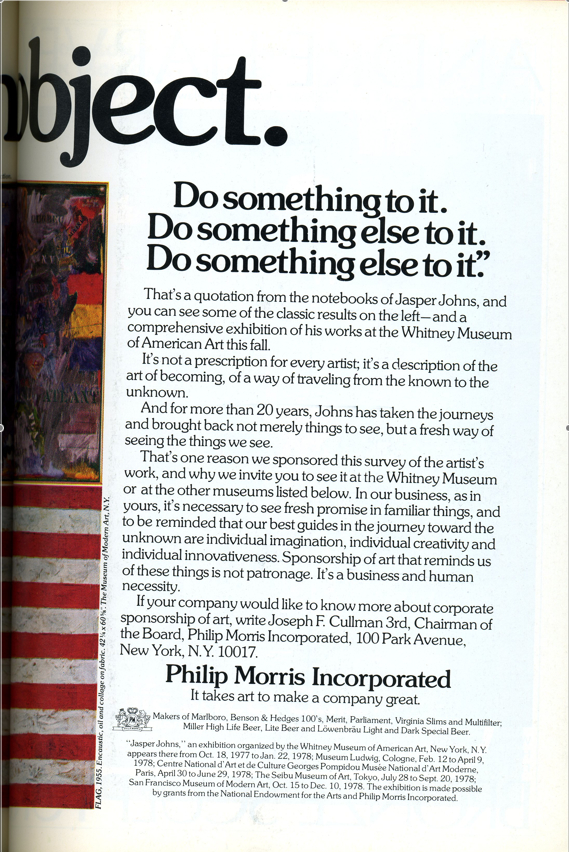
10 February 2007
The World is your School
Smoking In School
Holly G., Leicester, MA
I'm a concerned student from Leicester High and I'm writing on the subject of smoking on school grounds. I see nothing wrong with this. Students smoke anyway, and teachers can't control who smokes in school because there are just too many to catch in the process. I think about half of the students smoke in school. The other half is being affected by the secondhand smoke. But I think the students who do smoke should be able to smoke outside at break during lunch. That way it wouldn't affect those who don't smoke. If they don't give us this opportunity then the bathrooms and the halls will become full of more smoke and more students will be affected by this.
In my opinion I think something should be done. n
3 February 2007
1 February 2007
Smoke in School
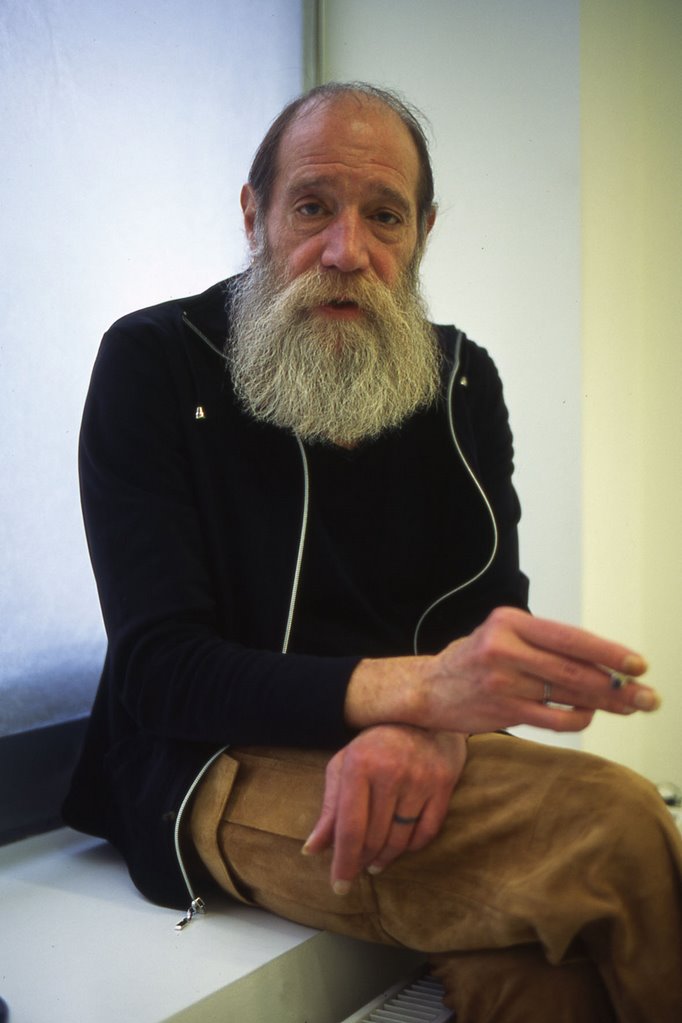
" Faces of type are like men’s faces. They have their own expression ; their complexion and peculiar twists and turns of line identify them immediately to friends, to whom each is full of identity.”
- J.L. Frazier
25 January 2007

12 January 2007

8 January 2007

3 January 2007


17 December 2006

Smoke-free Places Act
The Smoke-free Places Act requires on December 1, 2006 that all indoor workplaces and public places to be smoke-free. The Act requires all outdoor licensed areas and patios of all restaurants, lounges, beverage rooms and cabarets to be smoke-free.
Designated smoking rooms can be operated for the use of residents in health-care facilities for the acute or long-term care of veterans, in licensed nursing homes and residential care facilities and in homes for aged and disabled persons.
Click here for a copy of the Act
Overview of the Smoke-free Places Act
Total Smoking Ban
No smoking is permitted in the following enclosed places:
daycare, pre-school
school, community college or university [also, no smoking on school grounds]
library, art gallery or museum
health-care facility
cinema or theatre
video arcade, pool hall, billiards room
recreational facility where the primary activity is physical
recreation, including a bowling alley, fitness centre, gymnasium, pool or rink
multi-service centre, community centre/hall, arena, fire hall or church hall
meeting or conference room or hall, ballroom or conference centre
retail shop, boutique, market or store or shopping mall
laundromat
ferry, ferry terminal, bus, bus station or shelter, taxi, taxi shelter, limousine or vehicle carrying passengers for hire
common area of a commercial building or multi-unit residential building, including but not limited to corridors, lobbies, stairwells, elevators, escalators, escalators, eating areas, washrooms and restrooms
restaurants, lounges, beverage rooms, private clubs, cabarets, clubs or other places licensed to serve alcoholic beverages
bingos
a casino complex
a facility as defined in the Hospitals Act
offices of the Government of the Province, a municipality, a village or a school board
provincial jail, detention centre, or reformatory
Vehicles
no smoking in vehicles used in the course of employment while carrying two or more employees
Restaurants
no smoking at any time
Beverage rooms & Lounges
no smoking at any time
Places used for Bingo
no smoking at any time
Private clubs
no smoking at any time
Casinos
no smoking at any time
Licensed outdoor areas and patios
The Act requires all outdoor licensed areas and patios of all restaurants, lounges, beverage rooms and cabarets to be smoke-free
Nursing home or residential care facility or a part of a health-care facility used for the acute or long-term are of veterans:
Designated smoking rooms are permitted
must be enclosed and separately ventilated
only residents are permitted
signs must be posted at the entrance
Building entrances
no smoking within 4 metres of windows, air intake vents and entrances to places of employment
Tobacco Possession by Youth
no youth under the age of 19 may possess tobacco
tobacco possession is not an offence, however, peace officers with reasonable and probable grounds to believe that a person under 19 may be in possession of tobacco may confiscate tobacco.
Effective Date

Comes into force on January 1, 2003
If you have any questions specific to the Smoke-free Places Act please call 1-800-565-3611.
Subscribe to:
Posts (Atom)