28 November 2006


24 November 2006
The Mies Treatment


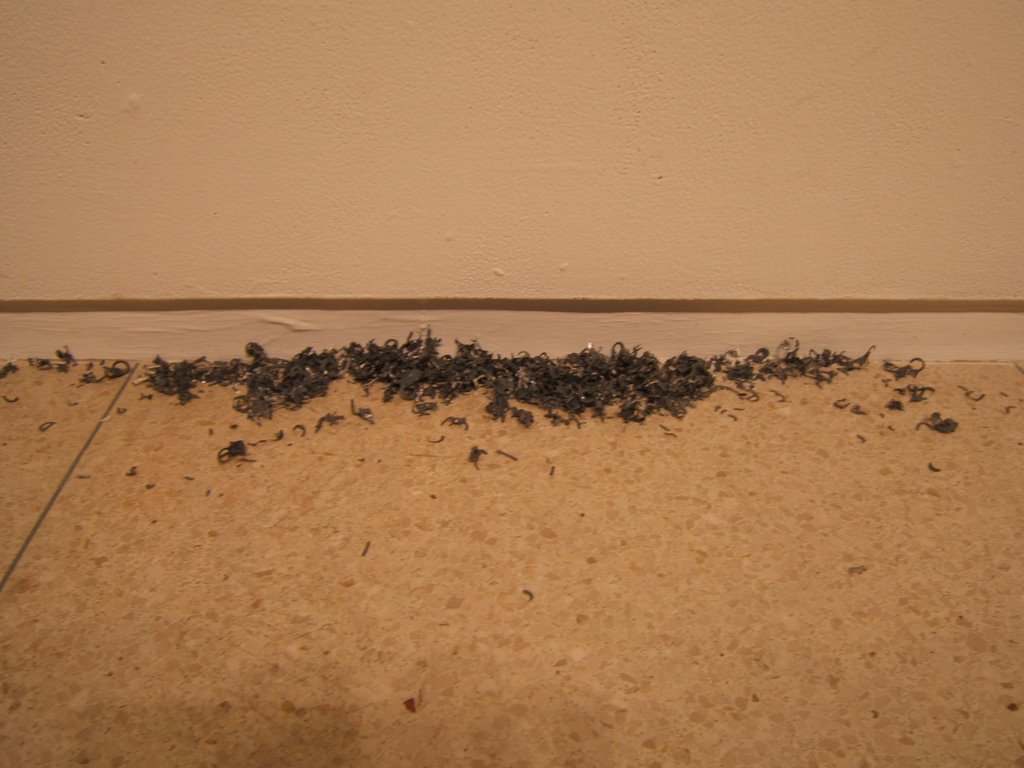
"Could we, through training and practice, emancipate ourselves from the middle world and achieve an intuitive understanding, not just a mathematical one, of the very small and very large?"
- Richard Dawkins in a presentation at McGill University.
"Dawkins holds that the existence or non-existence of God is a scientific hypothesis which is open to rational demonstration. Christianity teaches that to claim that there is a God must be reasonable, but that this is not at all the same thing as faith. Believing in God, whatever Dawkins might think, is not like concluding that aliens or the tooth fairy exist. God is not a celestial super-object or divine UFO, about whose existence we must remain agnostic until all the evidence is in. Theologians do not believe that he is either inside or outside the universe, as Dawkins thinks they do. His transcendence and invisibility are part of what he is, which is not the case with the Loch Ness monster. This is not to say that religious people believe in a black hole, because they also consider that God has revealed himself: not, as Dawkins thinks, in the guise of a cosmic manufacturer even smarter than Dawkins himself (the New Testament has next to nothing to say about God as Creator), but for Christians at least, in the form of a reviled and murdered political criminal. The Jews of the so-called Old Testament had faith in God, but this does not mean that after debating the matter at a number of international conferences they decided to endorse the scientific hypothesis that there existed a supreme architect of the universe – even though, as Genesis reveals, they were of this opinion. They had faith in God in the sense that I have faith in you. They may well have been mistaken in their view; but they were not mistaken because their scientific hypothesis was unsound."
- Terry Eagleton "Lunging, Flailing, Mispunching" - a review of 'The God Delusion' a book by Richard Dawkins, first published in the London Review of Books.
22 November 2006

15 November 2006
Designing Therapy Spaces
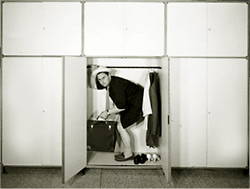
'Relationships that a human being finds in his environment are also relationships between any two objects. There are standards, suitabilities, modular systems, complex systems and last not least the relationships between products and systems. Such relationships become visible when two objects are placed in a room to form special interdependencies. these interdependencies do not have to be functional at all, but may be purely formal, e.g. when different pieces of furniture are placed in the same room their relationship is formal. this phenomenon is also found in urban development.'
- Hans Gugelot
31 October 2006
roses are red - http://www.prairieplant.com/
Prairie Plant Systems, a progressive and innovative plant R & D company, is seeking three individuals to round out its management team. If you are an agrologist, botanist or possess a similar degree in the plant sciences field who welcomes growth, change, challenge, and thinking outside the box, we want to talk to you.
If you would like more information or would like to submit an application please contact us.
Postings for Flin Flon, Manitoba Location
2. Part Time Gardeners
Seeking casual labour to work in our underground plant growth chamber. Candidates must be able to do physical work, go underground and be security cleared.
Duties
From time to time the services of casual labour are required for transplanting, harvesting, growth chamber cleanliness and maintenance as well as other duties that may be required from time to time.
Successful candidates will be put on a list for call up. All candidates must be security cleared.
To Apply
Apply by forwarding resume by November 15, 2006 to:
Personnel Manager
Prairie Plant Systems
Box 19A RR #5
Saskatoon, Sask
S7K 3J8
Fax: 306-975-0440
Or e-mail to: pps@prairieplant.com

If you would like more information or would like to submit an application please contact us.
Postings for Flin Flon, Manitoba Location
2. Part Time Gardeners
Seeking casual labour to work in our underground plant growth chamber. Candidates must be able to do physical work, go underground and be security cleared.
Duties
From time to time the services of casual labour are required for transplanting, harvesting, growth chamber cleanliness and maintenance as well as other duties that may be required from time to time.
Successful candidates will be put on a list for call up. All candidates must be security cleared.
To Apply
Apply by forwarding resume by November 15, 2006 to:
Personnel Manager
Prairie Plant Systems
Box 19A RR #5
Saskatoon, Sask
S7K 3J8
Fax: 306-975-0440
Or e-mail to: pps@prairieplant.com

30 October 2006

1. Good Art is innovative
2. Good Art makes a product understandable.
3. Good Art is elegant.
4. Good Art makes a product useful.
5. Good Art is unobstrusive.
6. Good Art is honest.
7. Good Art is long living.
8. Good Art is consequent right to the very last detail.
9. Good Art is friendly to the environment.
10. Good Art is as little Art as possible.
20 October 2006
17 October 2006





16 October 2006
15 October 2006
9 October 2006
30 September 2006
Just After Ten

"First i would like to say that i do not know alot about gravity and probably alot of things. I am not very well educated on gravity or any thing else really i am in high school and i know this may seem weird but then again you will think wow this seems so simple that it might actually be true. i know that i believe it because it makes so much sense. And i know that there are alot of people that think magnets and gravity are two different things but they are not.
my theory is that there are more than just the north and south pole. we just have not discovered them yet. i do not know how many but i know there are at least two. i think that the only reason we do not know is because the earth's pole is either not attracted to it or repels it. not every pole affects every other pole just some of them. we all have at least one or two at the least poles in us that is why we are connected to the earth. everything has at least one or two maybe more.
the earth and the planets have at least two poles in them. the sun is attracting us and pushing us at the same time. in the center there is a pole pushing us away and on top the pull is attracting us. that is why we do not crash on the sun and do not go away from it. think about the odds that 8 planets just happened to be going the perfect speed and distance from the sun as it went by to stay in orbit for ever there is no way there has to be a force pushing and pulling at the same time(magnets)
all the planets have this. they have poles scattered around also which is what makes us spin. the sun is pulling and pushing different sides making us spin. there is more on this theory that i have"
if you have any questions or want to here the rest email me at bigJbird82@yahoo.com
27 September 2006
21 September 2006

8 September 2006

20 August 2006
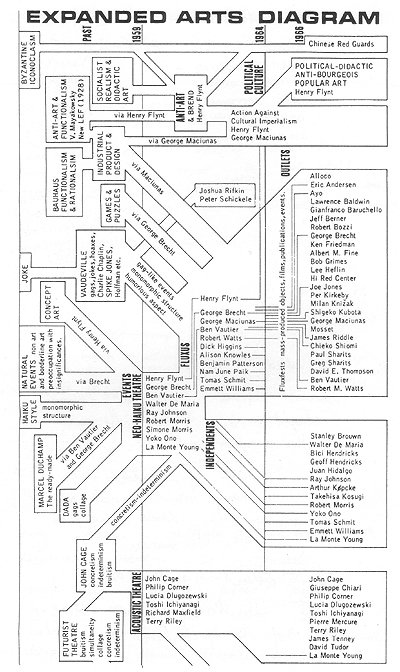
"Warning" sign posted on gate of defunct/abandoned "installation" in Williamsburg, Brooklyn.
This article has been viewed 910 times in the last 29 months
--------------------------------------------------------------------------------
elaine: 8th Sep 2005 - 15:19 GMT
a new slant on installation art - ... with dogs outfits by prada, perhaps
jack: 8th Sep 2005 - 23:52 GMT
elaine, its funny that you should mention prada. i met the women who runs the fashon company, prada.
11 August 2006
Answers from the archive
"What would be your advice to young designers?"
"Designers who can´t work with others, whether engineers or other key production people, are lost from the start. Because all those creative ideas will be of no use. Only when I listen to others and take on board their arguments, will they then be willing to accept my arguments. It´s that easy sometimes. I think this is one of the key skills a young designer must have. And of course they need a lot of luck and, in the design field, above all staying power, so they are not blown down by the first wind."- Dieter Rams
1 August 2006

26 July 2006
5 July 2006
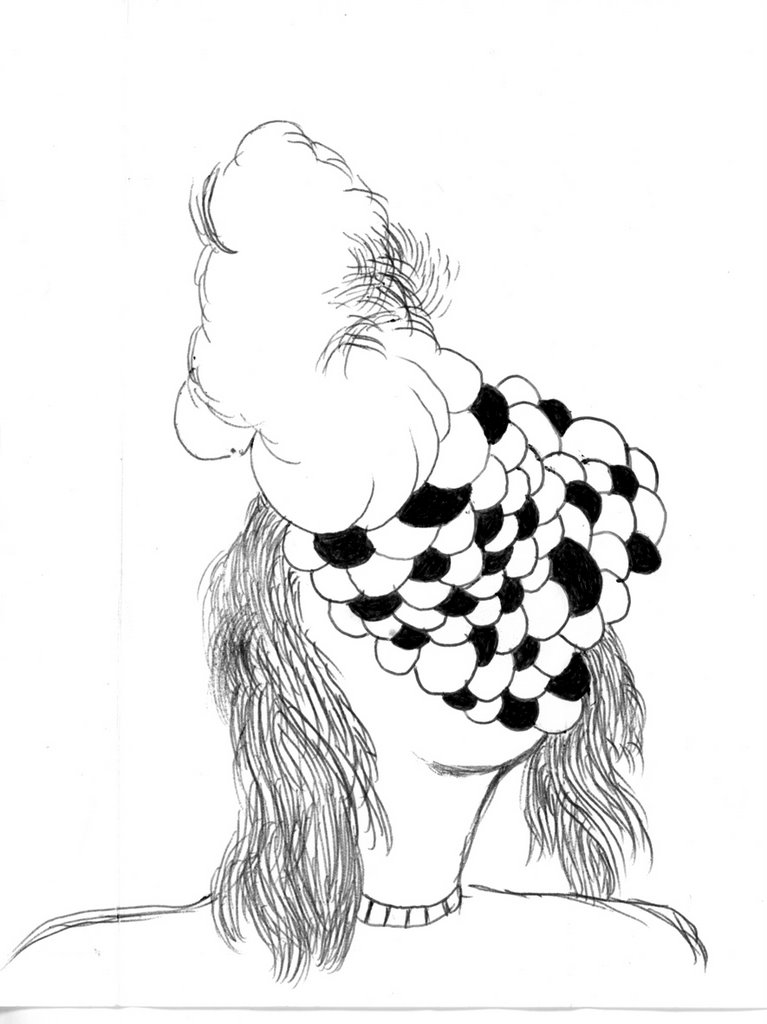
drifters dialectic
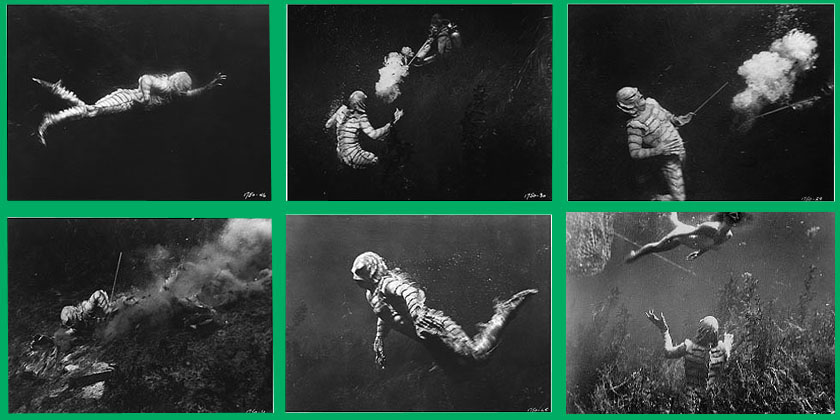
Day 4: The prosecution begins its case. Howard Morgan, a 14-year-old student in Scopes's biology class is on the witness stand:
Q--Did you attend school here at Dayton last year?
A--Yes, sir.
Q--Did you study anything under Prof. Scopes?
A--Yes sir.
Q--Did you study this book, General Science?
A--Yes, sir....
Q--Did he ever undertake to teach you anything about evolution?
A--Yes, sir....
Q--Just state in your own words, Howard, what he taught you and when it was.
A--It was along about the 2d of April.
Q--Of this year?
A--Yes, sir; of this year. He said that the earth was once a hot molten mass too hot for plant or animal life to exist upon it; in the sea the earth cooled off; there was a little germ of one cell organism formed, and this organism kept evolving until it got to be a pretty good-sized animal, and then came on to be a land animal and it kept on evolving, and from this was man.
26 June 2006

16 June 2006

29 May 2006
Update

I have just been awakened by people scraping crusty metal off the walkup staircase. My dream was set in a lush, flat country field containing humanbuilt waterfalls, caves extracted from the earth and turned inside out, historic ruins, and "primitive" monuments. The festivities seemed to follow the logic of a funeral (for me?), and we were all there celebrating with bonfires, and roasts. Rob had just arrived on his bicycle from a race, and Michael dressed in a police uniform. The proceedings seemed to go well, but the scraping metal interrupted a little too soon to know for sure.
28 May 2006
23 May 2006

I have already repressed the memory of the last post that was deleted

"Objects arise as the figures in the landscape of empire; narratives and actions put them in motion."
- W.J.T. Mitchell "What do pictures want?", The University of Chicago Press (Chicago and London;2005), p. 154.

24 April 2006

"Let us recall the staged performance of "Storming the Winter Palace" in Petrograd, on the third anniversary of the October Revolution, on 7 November 1920. Tens of thousands of workers, soldiers, students and artists worked round the clock, living on kasha (the tasteless wheat porridge), tea and frozen apples, and preparing the performance at the very place where the event "really took place" three years earlier; their work was coordinated by the Army officers, as well as by the avant-garde artists, musicians and directors, from Malevich to Meyerhold. Although this was acting and not "reality," the soldiers and sailors were playing themselves - many of them not only actually participated in the event of 1917, but were also simultaneously involved in the real battles of the Civil War that were raging in the near vicinity of Petrograd, a city under siege and suffering from severe shortages of food. A contemporary commented on the performance: "The future historian will record how, throughout one of the bloodiest and most brutal revolutions, all of Russia was acting"54; and the formalist theoretician Viktor Shklovski noted that "some kind of elemental process is taking place where the living fabric of life is being transformed into the theatrical."
-slavoj zizek "Repeating Lenin"
available: http://www.lacan.com/replenin.htm
13 April 2006
22 March 2006
21 March 2006

17 March 2006

7 March 2006

6 March 2006
3 March 2006
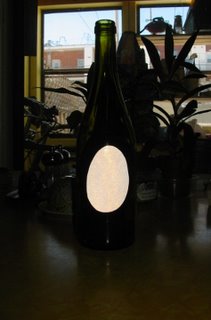
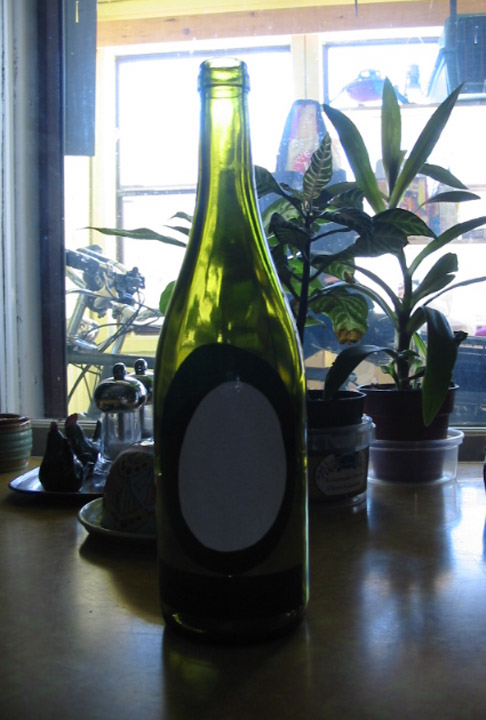
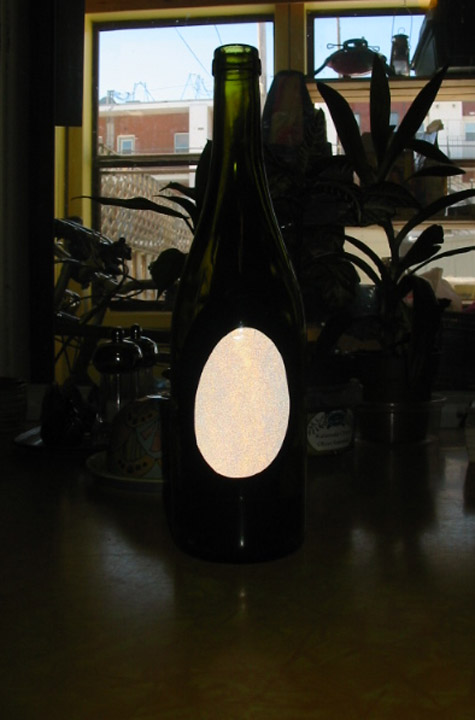
"Here the focus turns to the curious problem of presence-absence, which haunts research on systems of significations. A system or sub-system, whether of objects or words, both is and is not self-sufficient. It is self sufficient; it is complete whole. Each element refers to all others. It looks as full as an egg. Look at it a bit longer and a bit more closely: see, it empties itself. A host of questions, posed technically by linguists and tragically by philosophers, now arises. We ask: Who? For whom? Why? How? The system is not self-sufficient. This 'whole' is partial and open. It refers to 'something else': purpose on the on hand, and the 'subject', on the other, and beyond these two terms lies the totality and the meaning. (,,,)"
_ Henri Lefebvre, "Preface to the study of the Habitat of the 'Pavillon'" in "Lefebvre: Key Writings" (Continuum; NY, London; 2003) p. 132.

_ Henri Lefebvre, "Preface to the study of the Habitat of the 'Pavillon'" in "Lefebvre: Key Writings" (Continuum; NY, London; 2003) p. 132.
Subscribe to:
Posts (Atom)